BYD Shark 6 RHD vs JAC T9 RHD – Which Pickup Should African Buyers Choose?
Two customers can walk into a dealership looking for a new Chinese pickup and actually need completely different vehicles.
One may be a business owner in Nairobi who drives to the office every day, takes his family away at weekends and occasionally visits a farm.
The other may operate a construction company, agricultural business or commercial fleet and simply wants a diesel 4x4 that can tow, carry equipment and travel long distances without changing the way his drivers already work.
That is why comparing the BYD Shark 6 RHD and JAC T9 RHD only by horsepower misses the point.
These pickups are built around two very different ideas.
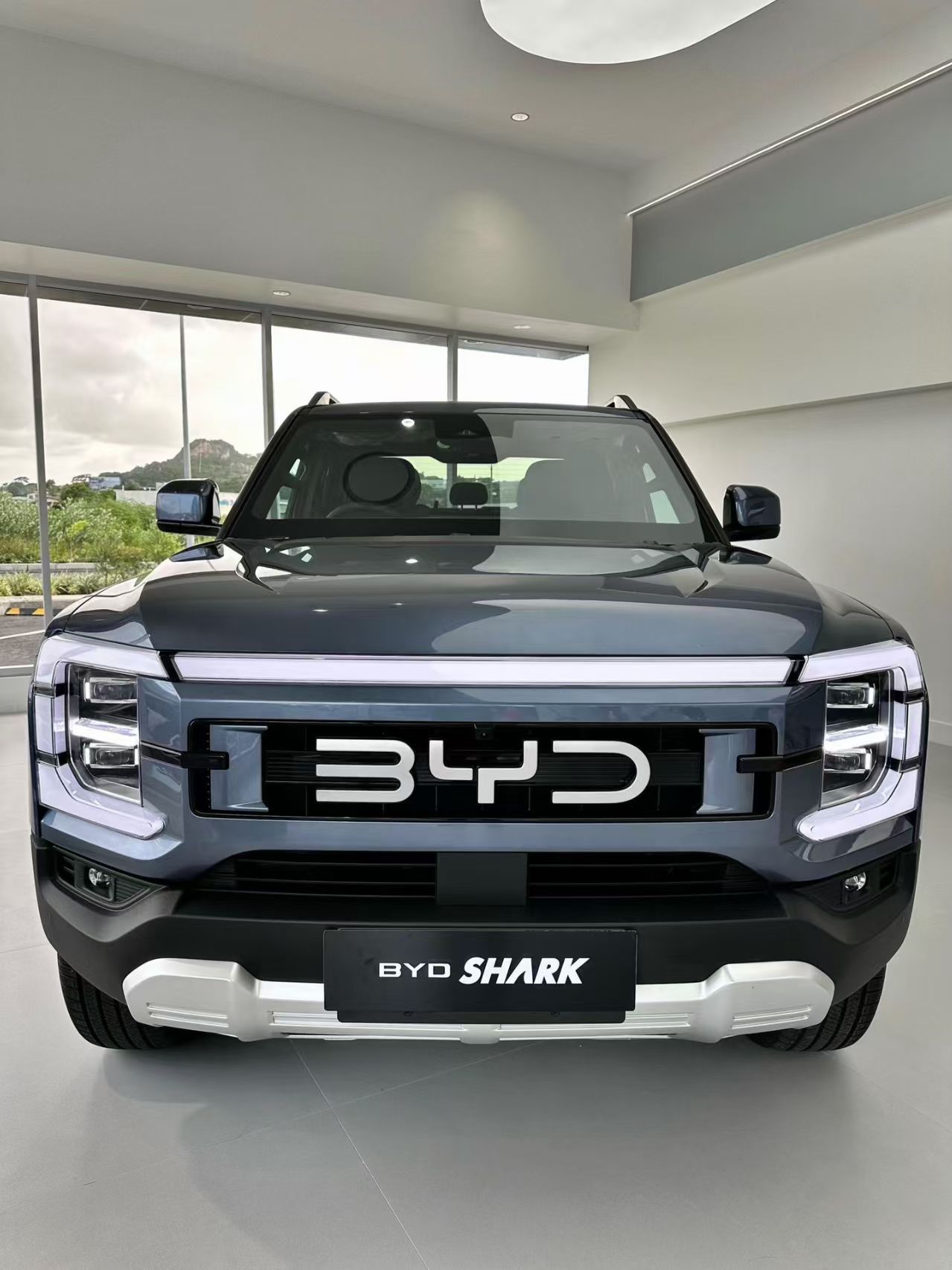
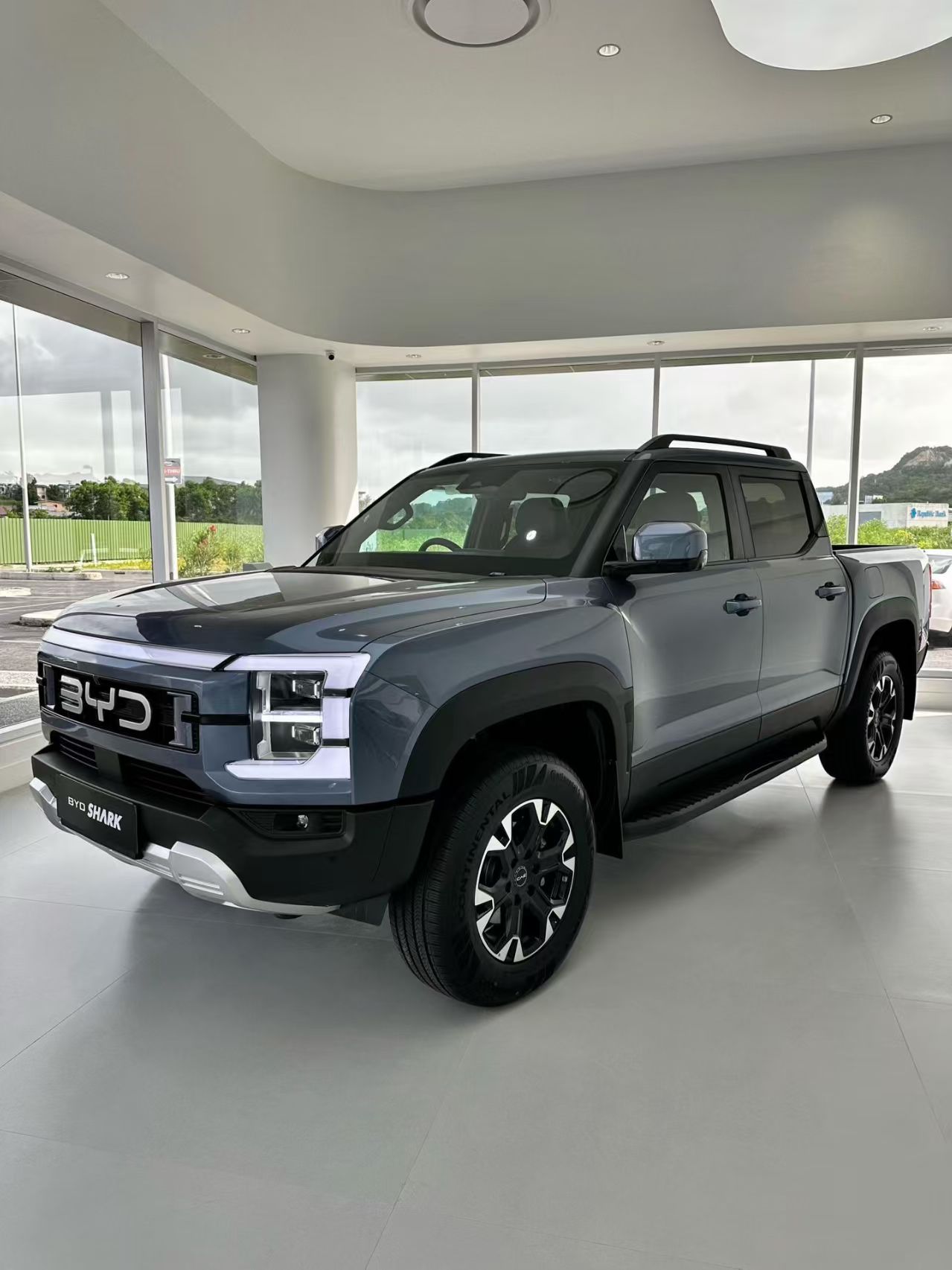
The BYD Shark 6 represents the new generation: plug-in hybrid power, strong acceleration, electric-assisted driving and an interior closer to a modern SUV.
The JAC T9 diesel follows a much more familiar African pickup formula: turbo-diesel engine, automatic transmission, low-range 4WD and traditional refuelling.
So which one should an African buyer choose?
The answer depends less on which vehicle is “better” and more on how the pickup will actually be used after it arrives.
Quick Answer: Shark 6 or JAC T9?
If you want the short version:
Choose the BYD Shark 6 if you want:
Strong PHEV performance
Premium daily-driving comfort
Modern technology
Quiet urban driving
A pickup that can also replace an SUV
A vehicle with strong showroom appeal
Choose the JAC T9 diesel if you want:
Familiar diesel operation
Traditional 4x4 hardware
Strong towing capability
Commercial or farm use
Simpler refuelling on long routes
A pickup drivers already understand how to operate
For many African dealerships, the smartest answer may actually be:
sell both — because they attract different customers.
The Biggest Difference Is Not the Badge — It Is the Powertrain
This is where the comparison should begin.
BYD Shark 6: Plug-in Hybrid
The current factory RHD Shark 6 Premium uses BYD's DMO plug-in hybrid architecture.
Official RHD specifications list:
1.5L turbo hybrid petrol engine
AWD
Combined maximum output of 321 kW
650 Nm
0–100 km/h in approximately 5.7 seconds
Up to 800 km NEDC combined driving range
2,500 kg braked towing capacity for the Premium version
BYD also lists Mud, Sand and Snow terrain modes.
That puts the Shark 6 much closer to a high-performance lifestyle pickup than a traditional work truck.
JAC T9: Turbo-Diesel
The current South African RHD JAC T9 uses a more conventional formula:
2.0L turbo-diesel
125 kW
Current torque specification of 444 Nm
ZF 8-speed automatic transmission
Available 4x4
Up to 3,500 kg braked towing capacity
Claimed fuel economy around 7.9 L/100 km
JAC says torque on current Lux and Super Lux T9 models was increased from 410 Nm to 444 Nm from September 2025.
For many African pickup customers, there is nothing to learn here.
Put diesel in it and drive.
That familiarity has real value.
BYD Shark 6 vs JAC T9 Specification Comparison
Item BYD Shark 6 Premium RHD JAC T9 Diesel 4x4
Powertrain Plug-in Hybrid Turbo-Diesel
Engine 1.5L Turbo Hybrid 2.0L Turbo-Diesel
Drivetrain AWD Part-Time 4WD
Maximum Power 321 kW 125 kW
Torque 650 Nm 444 Nm
Transmission Hybrid drivetrain ZF 8-speed automatic
Braked Towing 2,500 kg 3,500 kg
Ground Clearance Approx. 230 mm unloaded Approx. 210 mm
Terrain/4WD System Mud, Sand, Snow modes Low range + rear diff-lock on 4x4
Main Buyer Lifestyle / private / executive Commercial / farm / traditional pickup
Specifications vary by model year and destination market, so an exporter should confirm the exact factory RHD vehicle before order confirmation. BYD's official RHD information lists 230 mm unloaded ground clearance for the Shark 6, while JAC's RHD-market T9 documentation lists 210 mm ground clearance.
Do Not Look at 321 kW vs 125 kW and Immediately Declare a Winner
On paper, the Shark 6 destroys the diesel T9 in power.
But an African business customer buying five pickups for field operations may not care.
He may care much more about:
towing
payload
fuel availability
driver familiarity
servicing
downtime
parts availability
purchase cost
Similarly, a private buyer spending a significant amount of money on one pickup may not care that the diesel vehicle is simpler.
He may want:
acceleration
quietness
technology
comfort
premium interior
electric driving
something different from another diesel pickup
That's why these two vehicles should not be sold using the same sales pitch.
Which One Is Better for Nairobi, Dar es Salaam or Other Large Cities?
For predominantly urban use, the Shark 6 becomes very interesting.
A customer who can charge at home or at work can use the battery frequently for shorter daily journeys while still having a petrol engine available for longer travel.
The cabin is also much more aligned with what buyers increasingly expect from a modern SUV.
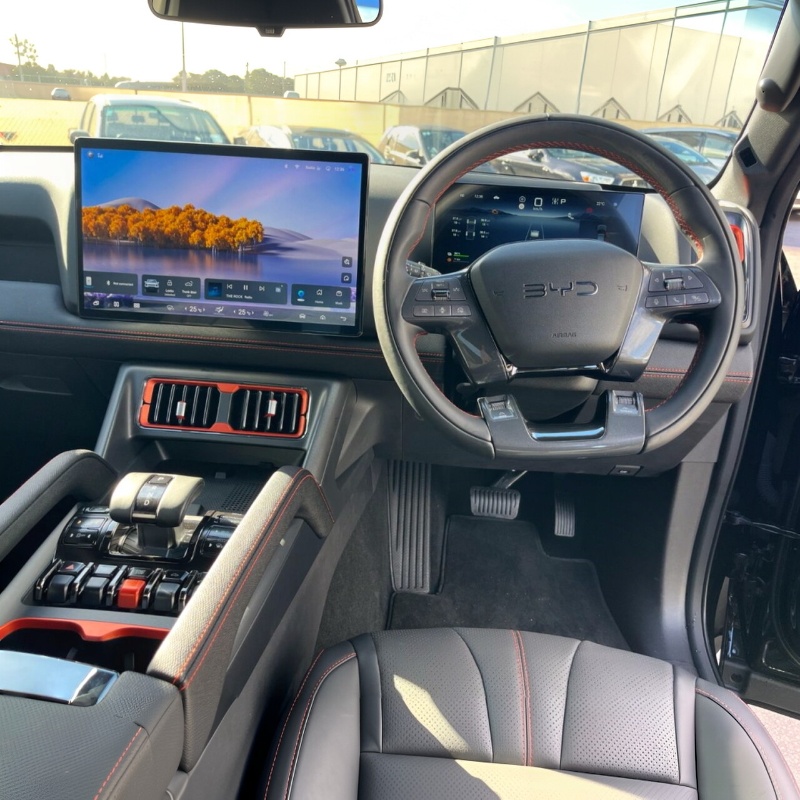
The Shark 6 Premium includes equipment such as a 15.6-inch rotating infotainment screen, heated and ventilated front seats, 360-degree camera, adaptive cruise control and smartphone connectivity in its RHD specification.
This creates an important distinction.
A customer may originally be searching for:
best Chinese SUV for Africa
and realise he can have SUV-like comfort plus a pickup bed.
That is exactly the type of buyer the Shark 6 can attract.
Which Is Better for Farm and Commercial Use?
This is where the decision becomes less obvious.
For a farm, construction business or working fleet, the JAC T9 diesel has a strong argument.
The RHD T9 Hunter specification lists:
1,000 kg payload
3,500 kg braked towing
Part-time 4WD
Rear differential lock on the 4x4 version
It also retains a conventional diesel engine and automatic transmission.
That makes the ownership model familiar to:
farmers
contractors
fleet drivers
mining-related companies
utility businesses
rural operators
A fleet manager may simply prefer:
“My drivers know diesel pickups. My mechanic knows diesel pickups. I don't need to teach anybody about charging.”
That is a legitimate reason to choose the T9.
But the Shark 6 Should Not Be Dismissed as a City Pickup
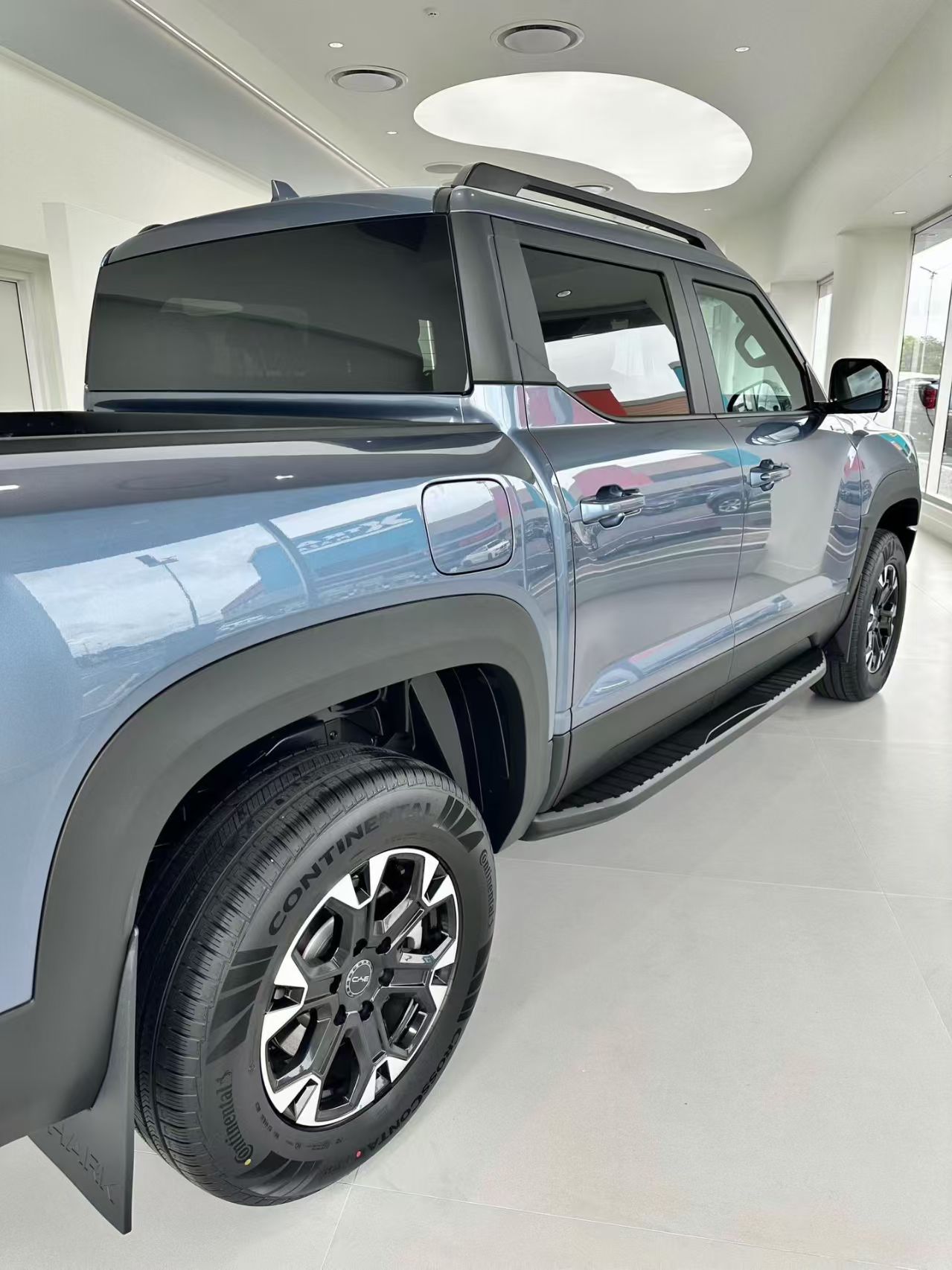
The Shark 6 has real off-road engineering behind it.
The RHD model uses double-wishbone front and rear suspension, and BYD specifies terrain modes for Mud, Sand and Snow.
The official Australian specification also lists approximately:
31° approach angle
19.3° departure angle
230 mm unloaded ground clearance
So the Shark 6 isn't simply an electric-looking lifestyle vehicle with a cargo bed attached.
The question is more about what kind of off-road use the customer expects.
Occasional dirt roads, farms, outdoor recreation and mixed road conditions?
The Shark 6 makes sense.
Daily heavy commercial use where maximum towing and familiar diesel operation are priorities?
The T9 may still be the easier choice.
Long-Distance African Driving Changes the Comparison
Imagine two vehicles leaving Nairobi.
Both may spend several hours on a highway before reaching roads where charging infrastructure becomes less predictable.
The JAC driver simply relies on diesel.
The Shark 6 owner has another strategy.
He can use electricity when charging is available but does not depend exclusively on the battery for the entire journey because the vehicle is a PHEV rather than a pure EV.
BYD quotes up to 800 km NEDC combined range for the current Shark 6 Premium RHD specification, although real-world range will vary with speed, load, terrain, climate and driving style.
That is why a PHEV pickup can make more sense in some African markets than a fully electric pickup.
You get electrification without making every journey depend on finding the next public charger.
What About Fuel Economy?
This needs careful explanation because online numbers can be misleading.
The JAC T9 diesel is straightforward.
JAC currently advertises around 7.9 L/100 km for the 2.0L CTi T9.
A plug-in hybrid is different.
The Shark 6's fuel consumption depends heavily on whether the owner actually charges it.
A driver who charges frequently and makes short daily journeys may use relatively little petrol.
A driver who never plugs the vehicle in and continually drives long distances with a depleted battery will experience a completely different fuel-consumption result.
Therefore:
Do not buy a PHEV because of one laboratory fuel-consumption number.
Buy it because your daily driving pattern actually allows you to use the hybrid system effectively.
This is particularly important for African dealers explaining the vehicle to first-time PHEV buyers.
Which Pickup Is Better for Botswana?
Botswana is a good example of why one answer does not fit every African country.
Long distances, farms, tourism and outdoor use all support strong pickup demand.
Shark 6
Better suited to:
business owners
personal/lifestyle buyers
tourism operators
buyers wanting premium comfort
customers with home charging
JAC T9
Better suited to:
farms
traditional commercial operations
towing
fleet use
buyers who prefer diesel
The B2B opportunity here is not necessarily choosing one model.
A dealer can position the T9 as the working pickup and Shark 6 as the premium lifestyle pickup.
Which Pickup Makes More Sense in Kenya?
Kenya has a much broader customer mix.
A Nairobi executive using his pickup as both a business and personal vehicle may find the Shark 6 much more attractive.
A contractor or agricultural customer operating further from major urban centres may still prefer the familiar diesel T9.
For Kenyan buyers, another consideration is importing and vehicle conformity.
The buyer should verify the exact factory RHD vehicle, VIN, production specification and current Kenyan compliance requirements before shipment rather than assuming that a model sold in another RHD country is automatically approved for Kenya.
What About Zimbabwe and Zambia?
Here, ownership simplicity can become particularly important.
Diesel pickups are already familiar to businesses, mechanics and drivers.
That gives the T9 an advantage among customers whose first concern is straightforward commercial use.
But the Shark 6 can address a completely different segment:
company directors
entrepreneurs
premium private buyers
hotel and hospitality operators
customers moving from SUVs into pickups
This is why Chinese pickup dealers should avoid trying to compete only on price.
The two vehicles can be used to create two different customer levels.
For Tanzania, Think About the Customer Before the Vehicle
A Tanzanian customer who spends most of his time around Dar es Salaam and has reliable home charging may get considerably more value from a PHEV than someone operating far from major urban centres every day.
Meanwhile, a business buying pickups for commercial operations may prioritise:
diesel availability
towing
repair simplicity
fleet standardisation
The correct vehicle depends on the customer's operating pattern.
That's a better question than:
“Which pickup has more horsepower?”
The Shark 6 Is the Better Showroom Vehicle
For an African car dealer, there is another consideration that doesn't appear in specification tables.
Which vehicle gets people into the showroom?
Here, the Shark 6 has a major advantage.
A customer sees:
a PHEV pickup
very high power
large rotating screen
premium interior
AWD
modern lighting
unusual design
and asks questions.
It creates social media content.
It generates videos.
It gives a dealer something new to explain.
It can become a traffic-generating product.
The JAC T9 May Be Easier to Sell to Traditional Pickup Buyers
The T9 has the opposite advantage.
The salesperson does not need to explain PHEV operation first.
A customer understands:
2.0 diesel
automatic
4x4
low range
diff-lock
3.5-tonne towing
That is a language pickup buyers already know.
And in some African markets, simplicity sells.
What About After-Sales Parts?
This should be discussed before purchasing either vehicle.
For a newer Chinese pickup entering an African market, buyers should ask the exporter whether future supply is available for:
headlights
tail lamps
mirrors
windscreens
bumpers
suspension parts
filters
brake parts
sensors
body panels
electronic components
For the Shark 6, also consider:
charging components
cooling system components
PHEV electrical parts
vehicle-specific diagnostic requirements
The cheapest vehicle quotation is not automatically the lowest ownership cost.
For dealers buying several vehicles, we recommend discussing an initial fast-moving spare parts package with the first shipment.
Accessories Can Also Change the Business Case
Pickups are particularly suitable for accessory sales.
A dealer can add:
Commercial Package
Bed liner
Tonneau cover
Mud flaps
Side steps
Floor mats
Underbody protection
Adventure Package
Electric roller shutter
Sports bar
Roof platform
Cargo management system
Tow bar
Camping accessories
Premium Protection Package
Model-specific TPE floor mats
Cargo liner
Paint protection accessories
Interior protection
Dash camera
This creates additional margin beyond the vehicle itself.
For dealers importing Shark 6 or T9 units from China, ordering accessories together can also simplify procurement.
Factory RHD Must Be Confirmed Before Payment
For Kenya, Botswana, Zimbabwe, Zambia, Tanzania, Uganda, Malawi, Mauritius and other RHD markets, do not simply ask:
“Do you have RHD?”
Ask:
Is this specific vehicle factory-built as right-hand drive?
Before paying the balance, request:
VIN
Actual RHD interior photos
Steering wheel photo
Pedal area
Dashboard
Production label
Exterior walk-around video
Exact model year
Exact trim
Charging-port photo for the Shark 6
A professional importer verifies the actual vehicle rather than relying only on a catalogue.
Shark 6 Buyers Need One Extra Check: Charging Compatibility
This is something T9 buyers do not need to worry about.
Before ordering a Shark 6, confirm:
AC charging connector
local electrical compatibility
portable charger
wallbox compatibility
vehicle software language
app availability
OTA availability in the destination market
A factory RHD vehicle does not automatically mean every digital and charging feature works identically in every country.
That needs to be checked before shipping.
Which One Would We Recommend?
There isn't one answer.
Buy the BYD Shark 6 if:
You want a pickup that feels like a modern premium SUV.
You value acceleration, technology and electrified driving.
You have access to regular charging.
The vehicle will be used for personal and business purposes.
You want a product that stands out from conventional diesel pickups.
Buy the JAC T9 if:
The pickup is primarily a working vehicle.
Diesel operation is important.
You tow heavy trailers regularly.
Your drivers already understand conventional diesel 4x4s.
You want low-range 4WD and familiar mechanical operation.
What Should African Dealers Stock?
If I were planning a new Chinese pickup dealership rather than buying one personal vehicle, I would not treat Shark 6 and T9 as direct substitutes.
I would position them like this:
JAC T9
The practical Chinese diesel 4x4
Target:
commercial companies
farmers
contractors
fleet operators
traditional pickup customers
BYD Shark 6
The premium new-generation PHEV pickup
Target:
entrepreneurs
executives
lifestyle buyers
premium private buyers
customers moving from SUVs
One attracts the traditional pickup buyer.
The other expands the pickup market to customers who may never previously have considered one.
That gives a dealer a much broader customer base.
Frequently Asked Questions
Is the BYD Shark 6 available in right-hand drive?
Yes. Factory RHD Shark 6 models are produced for right-hand-drive markets. The exact vehicle and destination-market specification should still be verified before shipment. BYD's current RHD specifications list AWD and a 321 kW PHEV drivetrain for the Premium model.
Is the JAC T9 available in right-hand drive?
Yes. The T9 is sold in RHD markets such as South Africa, including diesel 4x2 and 4x4 versions.
Which is more powerful, Shark 6 or JAC T9?
The Shark 6 Premium has substantially higher system output at 321 kW and 650 Nm, compared with the current diesel T9's 125 kW and 444 Nm.
Which can tow more?
The current Shark 6 Premium RHD specification lists up to 2,500 kg braked towing, while the JAC T9 diesel 4x4 specification lists up to 3,500 kg. BYD also offers other Shark 6 derivatives in some markets with different towing specifications, so buyers should verify the exact version being ordered.
Is the Shark 6 fully electric?
No. The Shark 6 is a plug-in hybrid pickup. It combines a petrol engine, electric motors and a Blade Battery.
Which pickup is better for farms?
For heavy traditional commercial use, long-distance operation and towing, many buyers may prefer the diesel JAC T9.
For mixed farm, personal and lifestyle use — particularly where home charging is available — the Shark 6 becomes more attractive.
Which is better for African car dealers?
They target different customers.
Rather than choosing only one, a dealer can use the T9 for traditional commercial pickup buyers and the Shark 6 for higher-end lifestyle and technology-focused customers.
Can I import a Shark 6 or JAC T9 from China to Africa?
Potentially yes, but the correct factory RHD specification, vehicle age rules, inspection requirements, duties, homologation and registration requirements depend on the destination country.
Always verify these before shipping.
Planning to Buy a Chinese RHD Pickup?
If you are comparing the BYD Shark 6 RHD, JAC T9 RHD or other Chinese right-hand-drive pickups, send us your destination and intended use.
We can help you compare the correct vehicle rather than simply sending you the cheapest quotation.
For a quotation, send:
Country:
Destination port:
Required model: Shark 6 / JAC T9
Quantity:
Use: Personal / Farm / Commercial / Dealer
RHD required: Yes
WhatsApp: +86 155 0371 5530
You can also ask about factory RHD vehicle availability, current specification, shipping, accessories and spare-parts packages.
Final Verdict
The BYD Shark 6 and JAC T9 prove that “Chinese pickup” no longer describes one type of vehicle.
The JAC T9 follows a formula African pickup buyers already understand:
diesel + automatic transmission + 4x4 + towing + commercial capability.
The Shark 6 represents where the segment is heading:
PHEV + high performance + premium comfort + technology + pickup practicality.
For the African customer who asks:
“Which one is better?”
the most useful answer is:
Shark 6 for technology, lifestyle and mixed personal use.
JAC T9 for traditional diesel, towing and commercial use.
The right pickup is the one that matches the customer's road, business and daily driving — not simply the one with the bigger number on the specification sheet.