For many buyers in Pacific Island markets, purchasing a vehicle from China still feels unfamiliar.
Some importers have spent years buying Japanese used vehicles, American pickups or vehicles supplied through regional dealers in Australia, New Zealand and Southeast Asia. China may not yet be the first sourcing destination they consider.
However, the global automotive market has already changed.
China is no longer simply a low-cost vehicle manufacturing country. It has become the world’s largest electric vehicle manufacturing center. According to the International Energy Agency, China produced nearly 75% of the world’s electric cars in 2025 and exported more than 2.5 million electric and plug-in hybrid vehicles during the year.
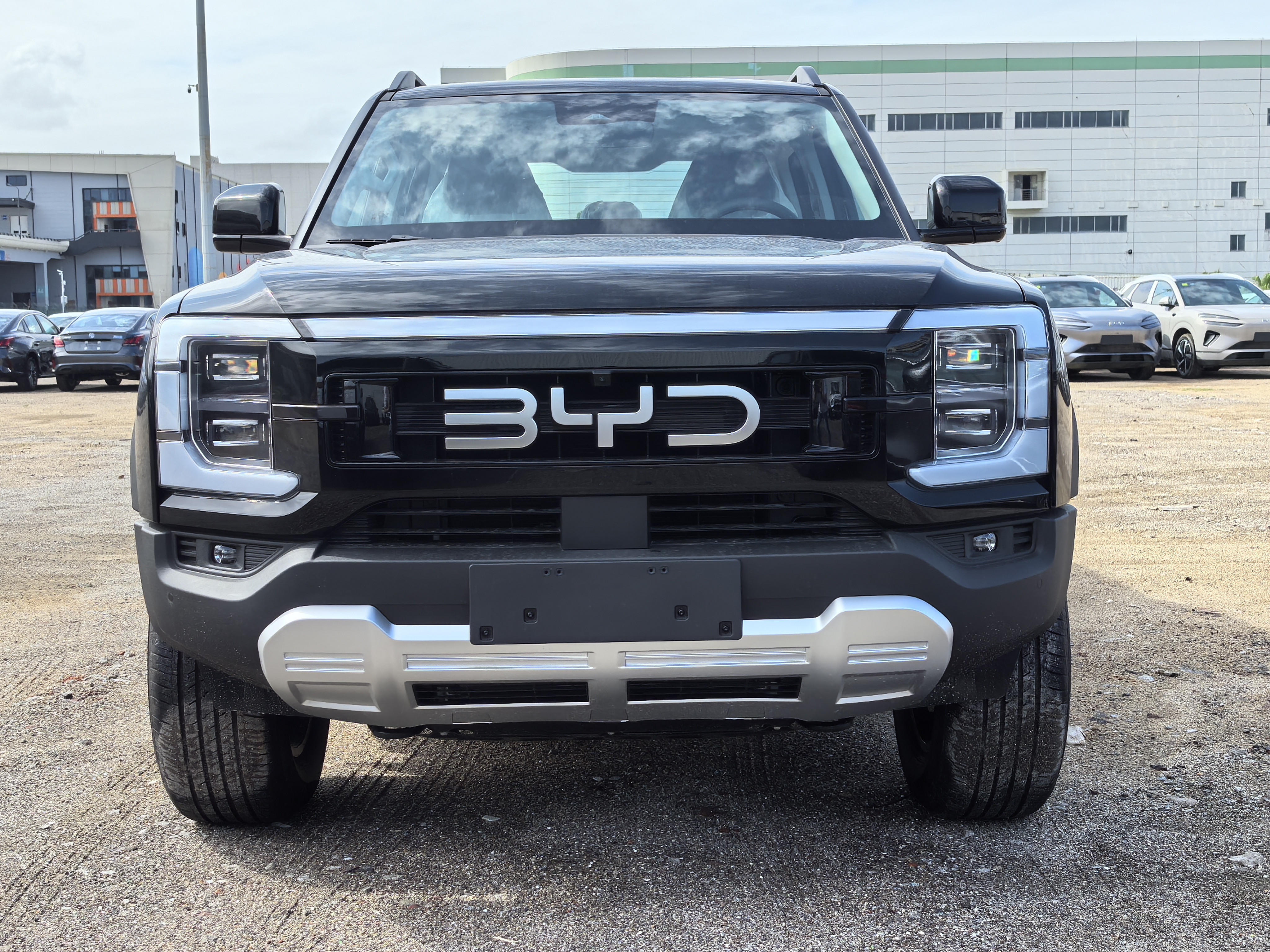
The left-hand-drive BYD Shark is a good example of this change. It combines pickup-truck practicality with plug-in hybrid technology, strong performance and a modern cabin. For Pacific markets that drive on the right side of the road, it can offer an alternative to conventional petrol and diesel pickups.
Which Pacific Markets Are Suitable for the LHD BYD Shark?
Not every Pacific Island market uses the same steering configuration.
Countries including Fiji, Samoa, Tonga, Papua New Guinea, Solomon Islands and Vanuatu generally use right-hand-drive vehicles. A left-hand-drive BYD Shark should therefore not be promoted to these markets without first checking local registration rules.
The LHD version is more relevant to Pacific markets that drive on the right, including:
Palau
Federated States of Micronesia
Marshall Islands
French Polynesia
New Caledonia
Guam
Northern Mariana Islands
For example, traffic in Palau, the Federated States of Micronesia and the Marshall Islands moves on the right side of the road. French Polynesia and New Caledonia also follow right-side traffic systems, making left-hand-drive vehicles the natural configuration for these markets.
Import regulations, model-year restrictions, emissions requirements and registration procedures can still differ between islands. Buyers should confirm local requirements before placing an order.
What Is the BYD Shark?
The BYD Shark is a double-cab plug-in hybrid pickup based on BYD’s DMO platform.
Instead of relying only on a traditional petrol or diesel engine, it combines a 1.5-liter turbocharged engine, electric motors and a Blade Battery. This allows the vehicle to complete shorter daily journeys using electricity while retaining the petrol engine for longer trips, remote areas and routes where charging facilities are limited.
Depending on the market specification, key figures can include:
Specification BYD Shark
Vehicle type Double-cab plug-in hybrid pickup
Steering Left-hand drive
Drive system Electric four-wheel drive
Engine 1.5L turbocharged petrol engine
Maximum system power Approximately 321 kW
Maximum torque Approximately 650 Nm
Pure electric range Up to approximately 100 km under NEDC testing
Combined range Up to approximately 840 km under NEDC testing
Braked towing capacity Up to 2,500 kg
Wheelbase 3,260 mm
Seating capacity 5
The official BYD specification lists approximately 321 kW of combined power, 650 Nm of torque and up to 2,500 kg of braked towing capacity. The exact range, payload, charging system and equipment should always be confirmed according to the export version and vehicle identification number.
Why a Plug-In Hybrid Pickup Makes Sense for Island Use
A pure electric pickup can offer low operating costs, but some Pacific Island buyers remain concerned about charging coverage, grid stability and the availability of public charging stations.
The BYD Shark provides a practical middle route.
Electric driving for short daily trips
Many island journeys are relatively short. Owners may drive between home, shops, hotels, ports, farms, construction sites and government offices without covering long highway distances.
When the battery is charged regularly, the Shark can complete many short journeys using electric power. This may reduce petrol consumption during routine local driving.
Petrol support for longer journeys
The petrol engine reduces dependence on public charging infrastructure. When the battery level is low or charging is unavailable, the vehicle can continue travelling using its hybrid system.
This is particularly useful for buyers who cannot yet rely entirely on an electric vehicle.
Four-wheel-drive capability
Heavy rain, unpaved access roads, construction areas, farms and coastal work sites can require more traction than a normal passenger vehicle provides.
The Shark’s electric four-wheel-drive system can support mixed urban, rural and work-related use. However, it should not be marketed as a specialized deep-water or extreme off-road vehicle. Buyers should select tyres and accessories according to their actual road conditions.
Mobile power capability
Depending on the specification, the vehicle can support vehicle-to-load electrical output. This can be useful for camping equipment, work tools, portable lighting and outdoor activities.
Buyers should confirm the socket type, output standard and included adapters before shipment because electrical specifications can vary by destination.
Why Buy the BYD Shark Directly from China?
Some buyers assume that ordering from a nearby regional dealer must always be easier. It may be convenient, but the vehicle can pass through several distributors before reaching the final customer.
Each additional step may introduce another margin, storage fee, local transport charge or specification limitation.
Direct sourcing from China can offer several advantages.
Closer access to the original supply chain
China is the main manufacturing and supply-chain center for many new energy vehicles, batteries, electronic systems and replacement parts. Buying closer to the source can provide access to a wider selection of configurations and production information.
It does not mean every quotation from China is automatically cheaper. The real landed cost depends on the vehicle price, inland transport, ocean freight, import duty, tax, port charges, inspection and registration expenses.
However, direct sourcing can reduce unnecessary intermediary markups and make the cost structure more transparent.
Clearer vehicle verification
Before shipment, a professional exporter should be able to provide:
Vehicle identification number
Exterior and interior inspection photos
Starting and driving video
Dashboard mileage
Battery and charging information
Manufacturing label
Tyre production dates
Loading photos and videos
Commercial invoice
Packing list
Bill of lading
Certificate of origin when required
This is especially important for a buyer who has never imported a Chinese vehicle before.
Access to new vehicles rather than unknown used stock
Some Pacific markets receive vehicles that have passed through several traders or storage locations. The buyer may not know the complete history of the vehicle.
Direct supply from China can provide access to new or low-mileage vehicles with identifiable VINs and inspection records before shipment.
More flexible shipping arrangements
For private buyers or dealers purchasing one vehicle, a 20-foot container may be considered, subject to vehicle dimensions and shipping-line acceptance.
For wholesale orders, a 40-foot container can generally carry two BYD Shark pickups when an appropriate loading plan and securing method are used.
RoRo shipping may also be available on selected routes, but availability varies greatly between Pacific ports. Container shipping can provide better protection and may also allow approved spare parts or accessories to be shipped with the vehicles.
The final loading method should be confirmed only after checking the vehicle dimensions, destination port, shipping-line rules and dangerous-goods requirements for the plug-in hybrid battery.
China Is Becoming Familiar Through Its Vehicles
Many customers in small island markets may not have visited China. They may know little about Chinese cities, factories, ports or automotive brands.
That unfamiliarity is understandable.
But familiarity with a country is not the same as product capability.
Chinese new energy vehicles are already being sold across Southeast Asia, Latin America, Europe, the Middle East, Africa, Australia and New Zealand. In emerging and developing markets outside China, many of the lower-cost electric vehicles supporting market growth are imported from China.
The international expansion of Chinese vehicles is not based only on lower prices. Buyers are also paying attention to:
Battery technology
Vehicle software
Plug-in hybrid efficiency
Interior equipment
Electric-motor performance
Safety systems
Manufacturing scale
Faster model development
The BYD Shark shows that Chinese manufacturers are moving beyond small electric cars. They are now competing in pickup, SUV, MPV and commercial-vehicle categories traditionally controlled by Japanese, American and European brands.
Is the BYD Shark Cheaper Than a Conventional Pickup?
The purchase price should not be compared only with the cheapest diesel pickup available in the destination market.
A more accurate comparison should include:
Vehicle purchase price
International shipping
Import duty and local tax
Fuel consumption
Electricity costs
Maintenance requirements
Standard equipment
Warranty and parts availability
Expected resale value
The Shark may offer more power, more standard technology and quieter daily driving than many traditional pickups. Its plug-in hybrid system can also reduce fuel use when the owner has convenient access to home or workplace charging.
However, a buyer who never charges the battery will not receive the full operating-cost advantage of a plug-in hybrid. Customers should evaluate how and where the vehicle will be charged before purchasing.
Recommended Buyers in Pacific Island Markets
The LHD BYD Shark may be suitable for:
Vehicle dealers introducing Chinese new energy pickups
Hotel and resort operators
Construction companies
Agricultural businesses
Utility and maintenance contractors
Tourism companies
Government and public-service fleets
Boat owners requiring towing capability
Private buyers wanting a powerful family pickup
Companies seeking to reduce routine fuel consumption
For fleet customers, starting with one or two vehicles can be a sensible approach. The buyer can test charging, local road performance, customer acceptance and maintenance support before placing a larger order.
Importing Through China EV Source
China EV Source can support Pacific Island buyers from vehicle sourcing to container loading.
A standard order process can include:
Confirm the destination country, port and steering requirement.
Select the BYD Shark version, exterior colour and equipment.
Confirm the VIN colour and equipment.
Confirm the VIN, production status and export quotation.
Pay a 30% deposit to secure or order the vehicle.
Allow approximately six to eight weeks when factory production is required.
Receive inspection photos, videos and vehicle details.
Pay the remaining 70% balance after vehicle confirmation.
Arrange export declaration, container loading and ocean shipment.
Receive the commercial invoice, packing list, bill of lading and other available documents.
Available stock may be shipped sooner than a factory-order vehicle.
Before quotation, the buyer should provide the destination port, required quantity, preferred colour and whether the quotation should be FOB, CFR or CIF.
Important Checks Before Ordering
Before importing an LHD BYD Shark, confirm the following locally:
Are left-hand-drive vehicles permitted?
Is the plug-in hybrid version eligible for registration?
Is there an age or manufacturing-year restriction?
What import duty, VAT or excise tax applies?
Is a pre-shipment inspection required?
Is an official local dealer warranty required for registration?
Which charging connector is suitable for the destination?
Are replacement parts and diagnostic services available?
Does the destination port accept plug-in hybrid vehicles in containers?
These checks should be completed before payment, not after the vehicle arrives at the port.
Frequently Asked Questions
Is the BYD Shark fully electric?
No. It is a plug-in hybrid pickup. It can drive for shorter distances using battery power and use its petrol engine and hybrid system for longer journeys.
Is the BYD Shark available with left-hand drive?
Yes. LHD versions are available for right-side-traffic markets. The steering configuration must be confirmed before ordering.
Can it be used without public charging stations?
Yes. The petrol engine allows continued operation when charging is unavailable. Regular charging is still recommended to obtain better fuel efficiency.
Can two BYD Shark pickups fit in one container?
A professionally planned 40-foot container can generally accommodate two units. The final arrangement depends on the model dimensions, loading frame, shipping-line rules and destination requirements.
Is direct purchasing from China always cheaper?
Not in every case. Direct supply can reduce intermediary margins, but the buyer must calculate the full landed cost, including shipping, duty, taxes and port charges.
Can spare parts be shipped with the vehicle?
Common service parts and approved accessories may be included when permitted by the shipping line and customs regulations. Batteries, liquids and certain restricted items require separate confirmation.
Is the Shark suitable for every Pacific Island country?
No. Some Pacific countries use right-hand-drive vehicles. The LHD Shark is mainly intended for markets that drive on the right side of the road.
Final Thoughts
Pacific Island buyers do not need to know everything about China before considering a Chinese new energy vehicle.
The more important questions are whether the vehicle matches local traffic rules, whether its technology fits local driving conditions, whether the landed cost is competitive and whether the exporter can provide transparent inspection and shipping documentation.
The LHD BYD Shark offers a combination that is still uncommon in the pickup market: electric daily driving, petrol-powered flexibility, four-wheel-drive performance and double-cab utility.
For Palau, Micronesia, the Marshall Islands, French Polynesia, New Caledonia and other right-side-traffic Pacific markets, sourcing directly from China can provide a more direct route to the vehicle, its original supply chain and its export documentation.
Jack | China RHD Auto Export Specialist
Helping Global Dealers Source Reliable Vehicles from China.
WhatsApp: +86 155 0371 5530